
The Ongoing Experiment
The “Bad Apartment”
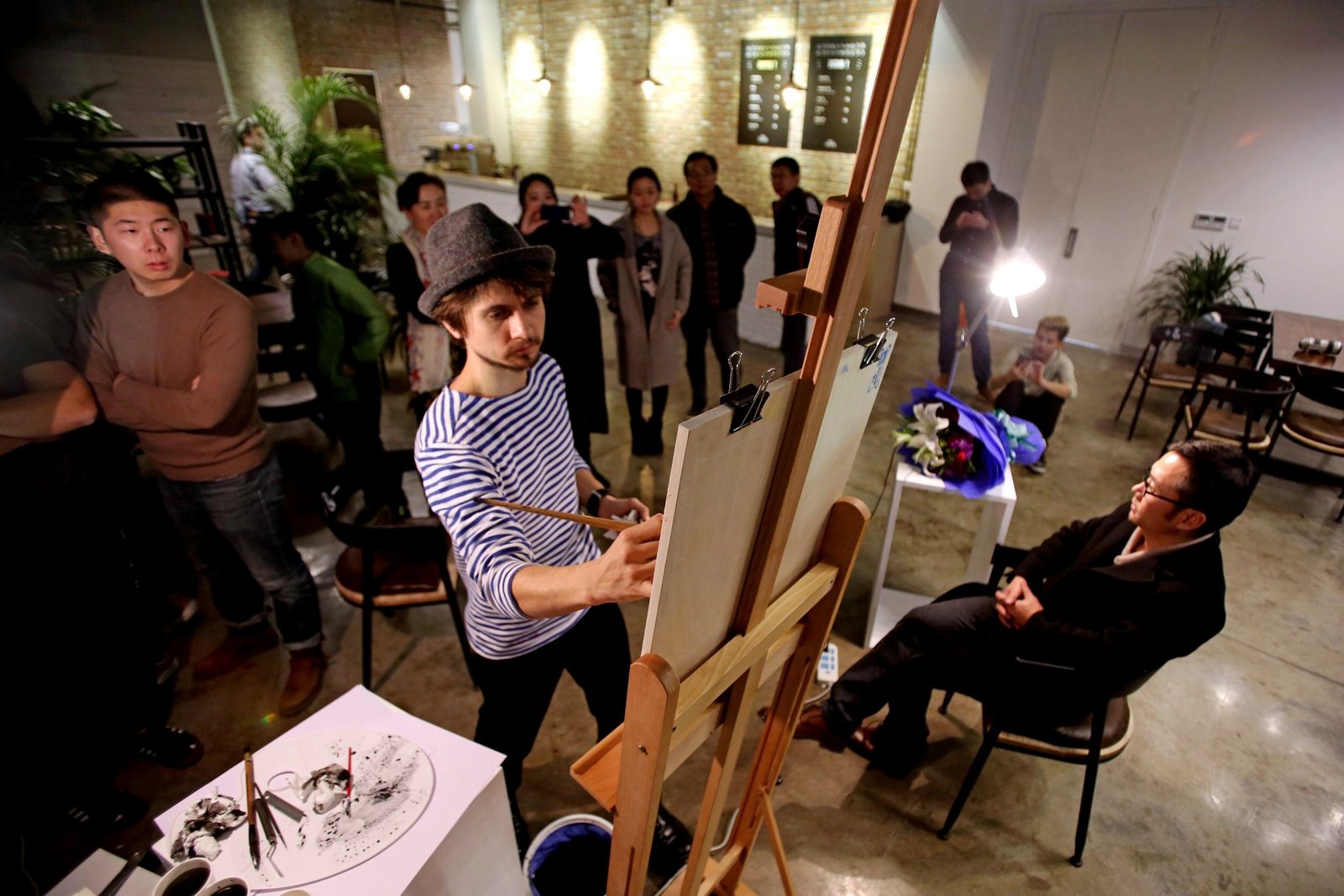
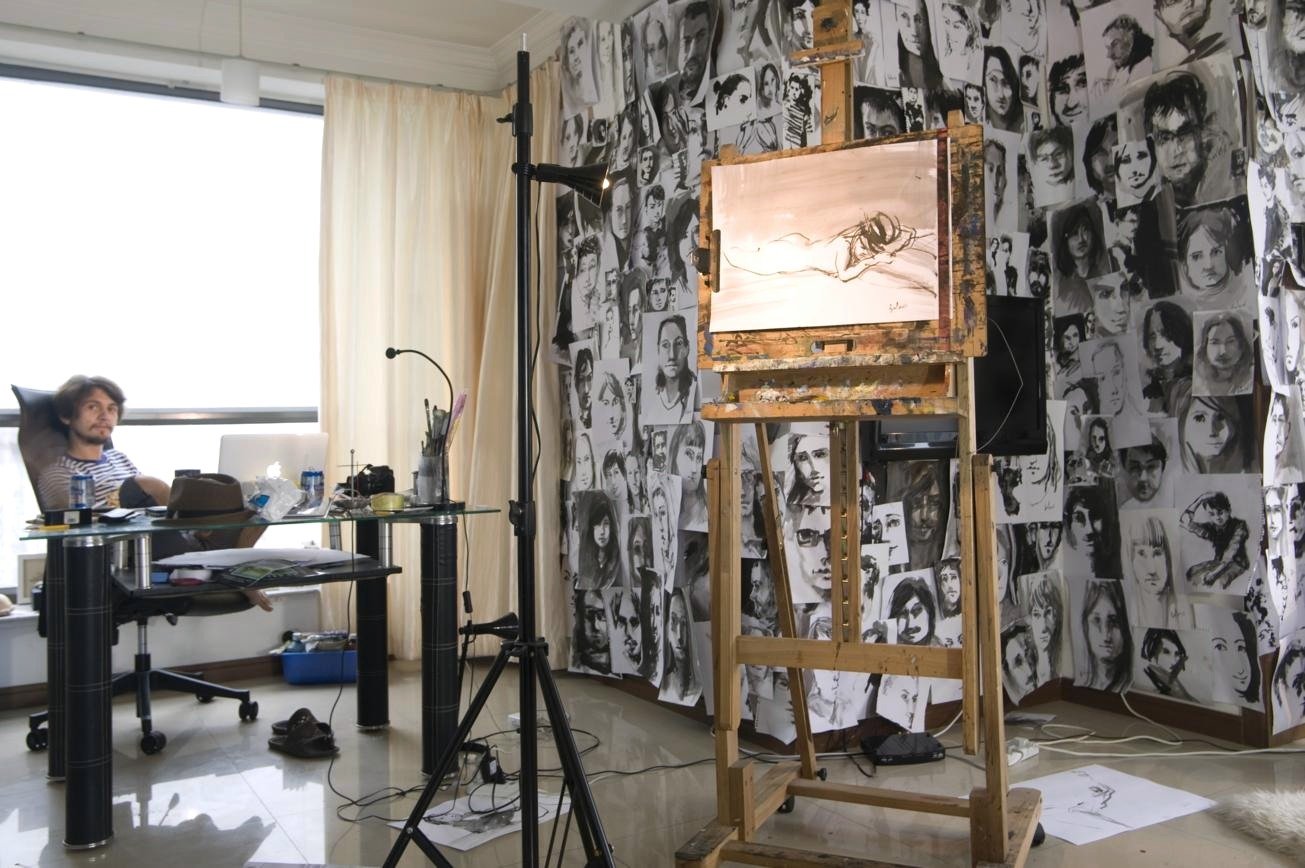
The story of Stone Oven House began long before the project had a permanent address. One place to begin is Shanghai, in an apartment nicknamed the “Bad Apartment” after Bulgakov. Having moved to the city, artist Sergey Balovin began inviting people to his home with gifts, offering portraits in return. His studio, with its rooftop terrace above the city, became a gathering place with a following of its own, appearing in television reports and magazines. Almost all its furnishings were gifts; the refrigerator held food and wine received for portraits. Artists, musicians, travellers and celebrities passed through its doors.
What began as a game soon acquired a name: In Kind Exchange. There was no agreed price. The artist offered something he knew how to make; the other person offered something they had and wanted to share. Unlike barter based on matching the assessed worth of two things, this was an exchange of gifts without price tags. Its significance was not simply that possessions could be acquired without money. Removing the negotiated price changed the encounter itself: one person offered their work, the other chose how to respond, and market price ceased to be the only measure of value.
From the apartment into the world
In 2012, the project entered a very different setting. Sergey was awarded a six-month residency at the Swatch Art Peace Hotel, an international arts space in a historic building in central Shanghai. There he continued In Kind Exchange and prepared its next stage. Among those who visited his studio was Johann Schneider-Ammann, then a member of the Swiss Federal Council and Switzerland’s economics minister, who sat for a portrait during an official visit to China. He would later serve as President of the Swiss Confederation in 2016.
The contrast between the “Bad Apartment” and the Swatch Art Peace Hotel mattered. The project was never a study of poverty or self-denial. An exchange could lead to a mattress in someone’s apartment, a luxury hotel or dinner in a good restaurant. The question was not how to do without quality, but how human contact might open doors into very different worlds, without a price being fixed in advance.
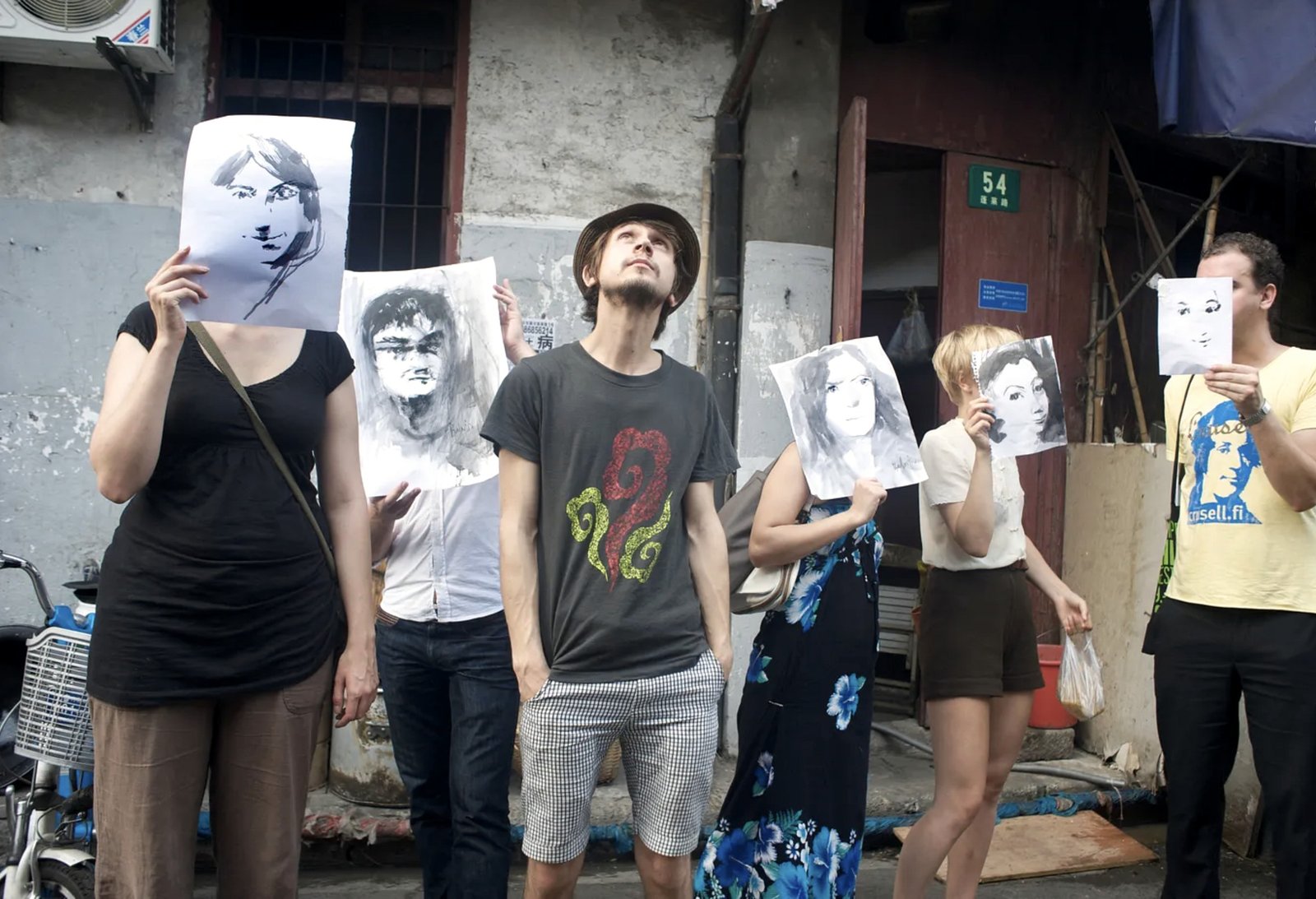
In 2013, Sergey left Shanghai on a round-the-world journey without a wallet, intending to pay his way with drawings. Over seventeen months and thirty-six countries, portraits brought food, accommodation and transport. The round-the-world journey ended, but his travels through In Kind Exchange continued. They brought him back to Italy, where he met Claudia Beccato in 2015.
Travel as a school of hospitality
Travelling gradually became more than a test of whether it was possible to live without money. Sergey stayed not only in hotels but, above all, in other people’s homes, encountering different cultures and ideas about comfort, privacy, generosity and the relationship between host and guest. A second, much longer experiment was taking shape: an exploration of hospitality.
What does someone need when they are far from home? Why does one place remain merely a convenient bed for the night, while another is remembered years later? How do you become a good guest, or welcome someone with care without taking away their freedom? What makes a house a home? The experience behind these questions would later become one of the foundations of Stone Oven House.
Claudia and a shared project
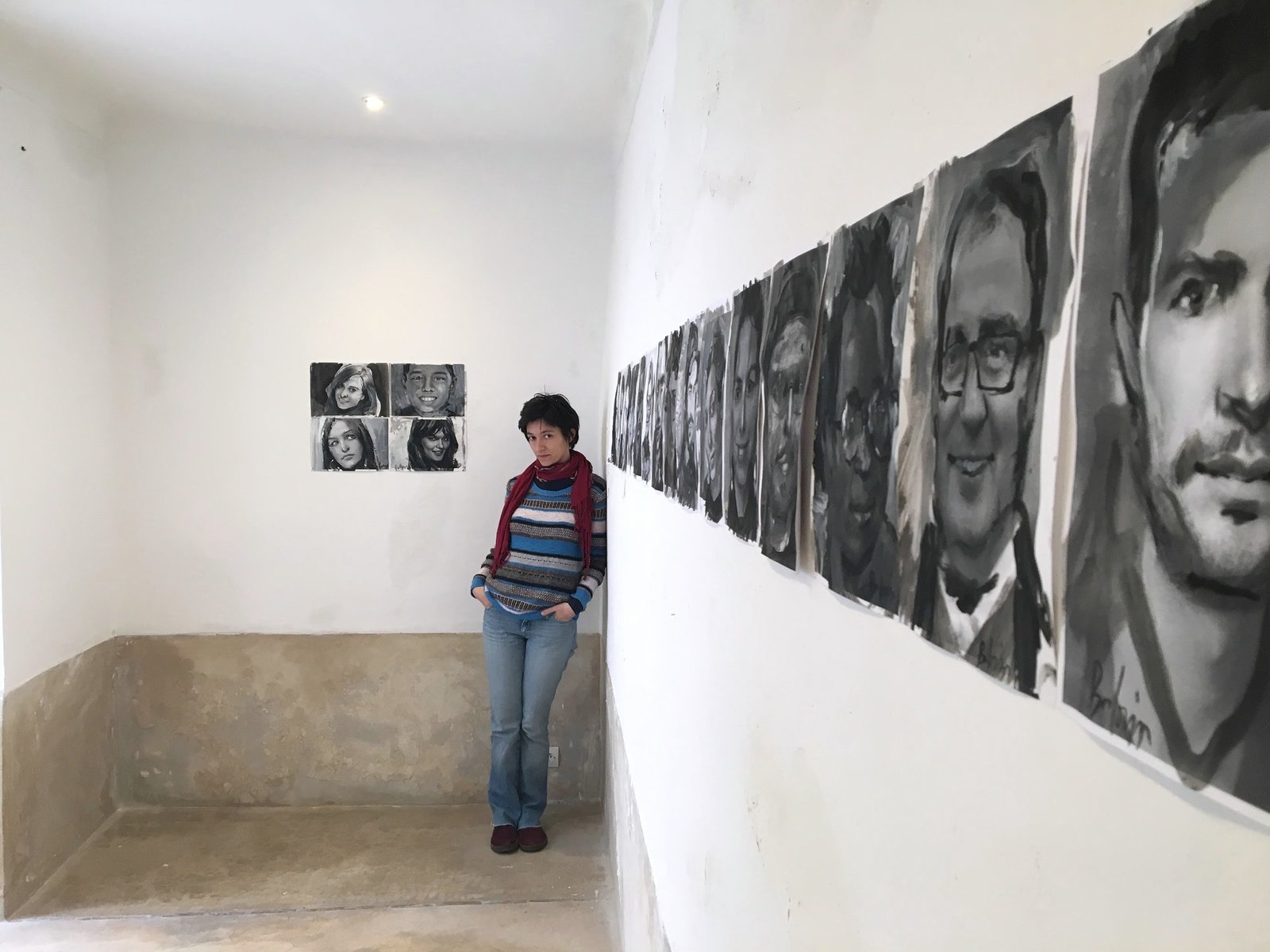
Claudia became part of In Kind Exchange almost immediately. They continued travelling together, and one artist’s experiment became the shared project Balovin & Beccato. Their journeys were no ascetic rejection of a good life. Exchanges could mean hitchhiking and sleeping in strangers’ homes, but also beautiful hotels, good wine and romantic dinners in Michelin-starred restaurants. Doing without money did not mean doing without quality, beauty or pleasure; it changed the way they reached them.
In 2016, their wedding in Montenegro became part of the experiment. It was connected to the exhibition The Wedding [as it should be] at Dukley European Art Community. The familiar elements of a wedding—the meal, flowers, cake, transport and decorations—were obtained through In Kind Exchange or became elements of the artwork itself. Another question was beginning to emerge: if exchange could sustain journeys, events and a life together, could it also create a permanent place?
The first Stone Oven House
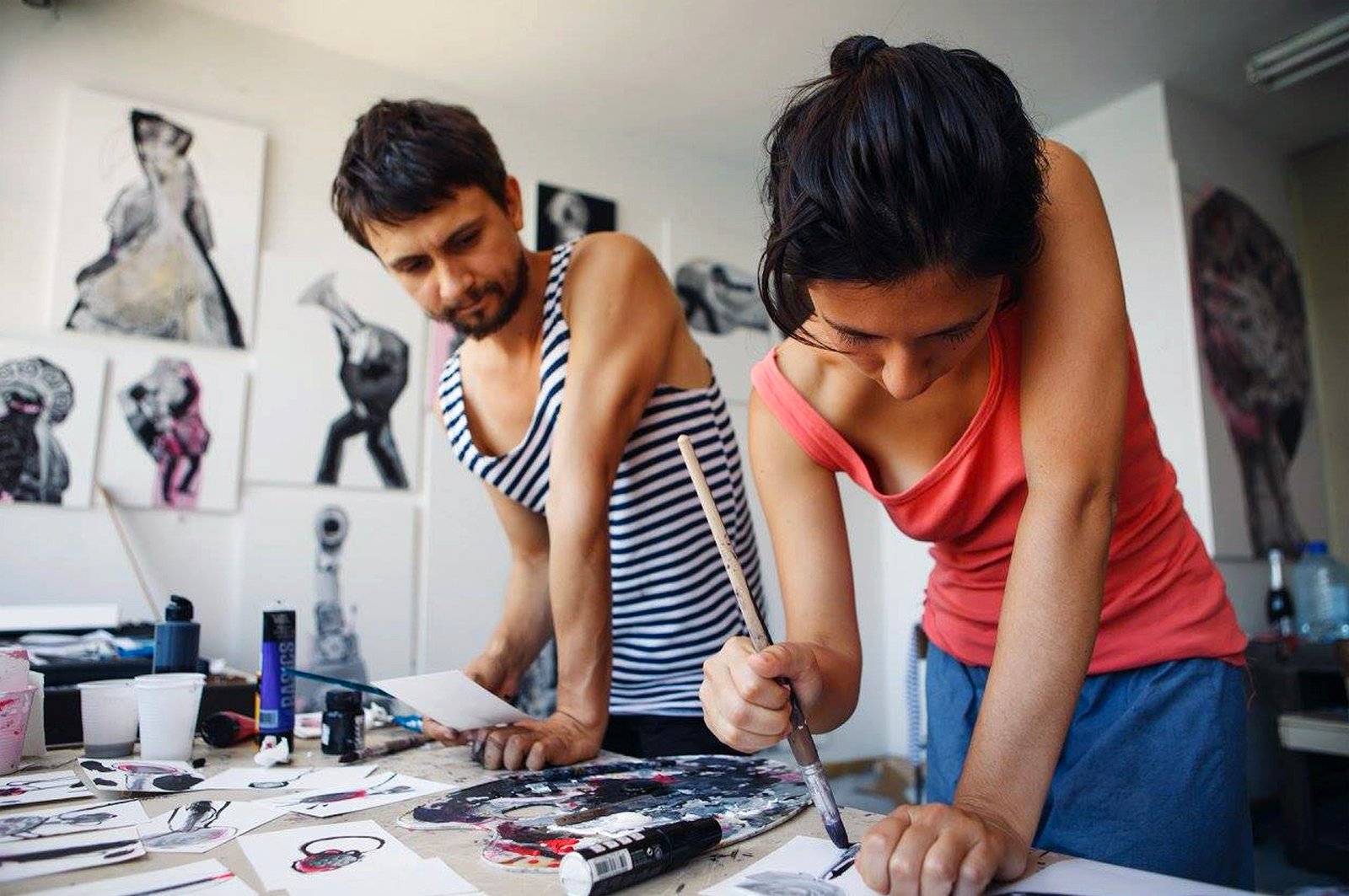
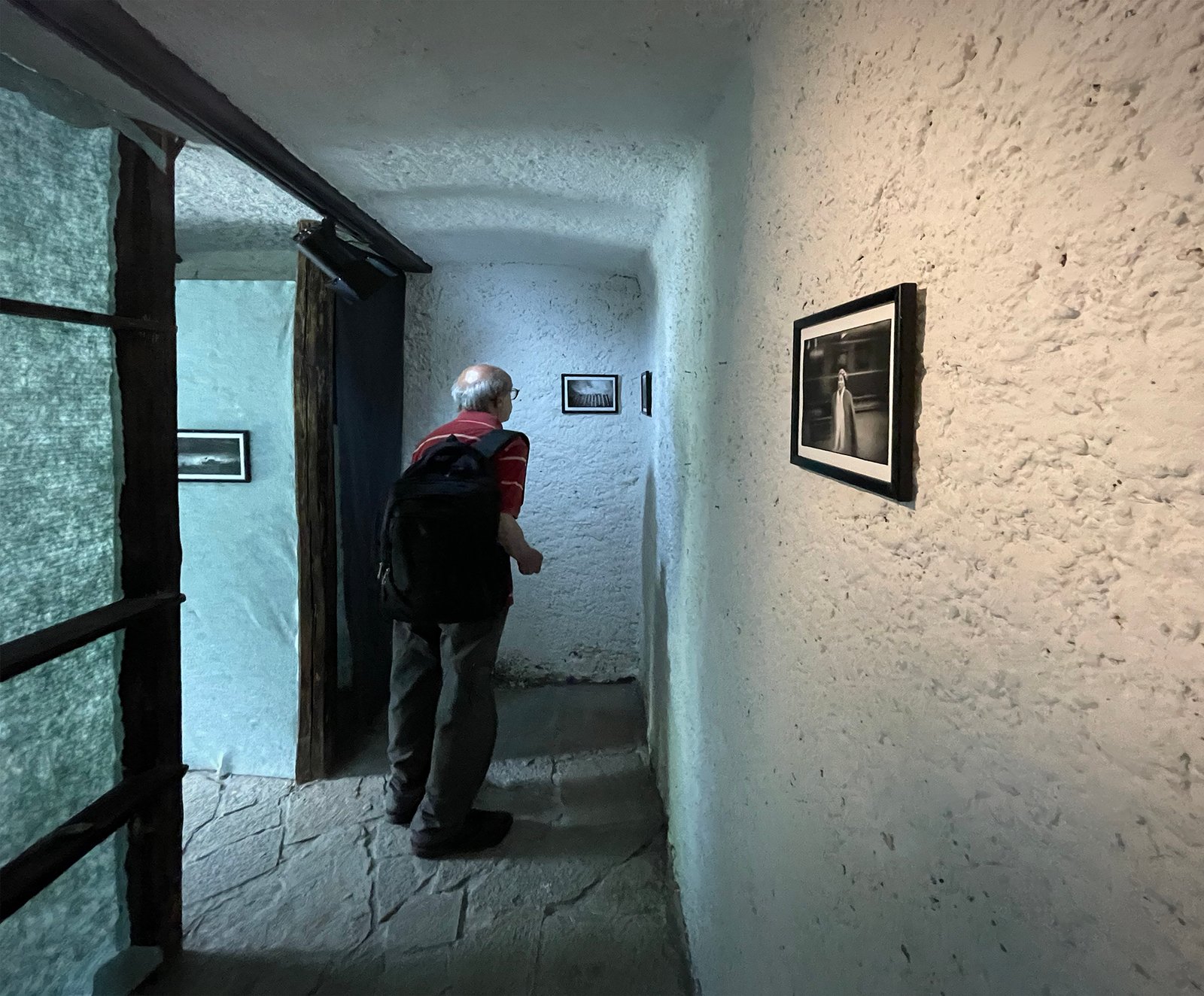
In 2017, Sergey and Claudia approached the owners of an empty farm in Rorà with an unusual proposal: they would restore and maintain the house in return for being able to use it. Work on the first Stone Oven House carried the logic of In Kind Exchange into architecture. Friends and artists helped with repairs, brought objects and materials, and joined the life of the place.
The house hosted exhibitions, concerts, shared dinners and artist residencies. People who came to help restore it often became both collaborators and its first residents. Rather than bringing the experiment to an end, the house gave it another form.
Vernarèa
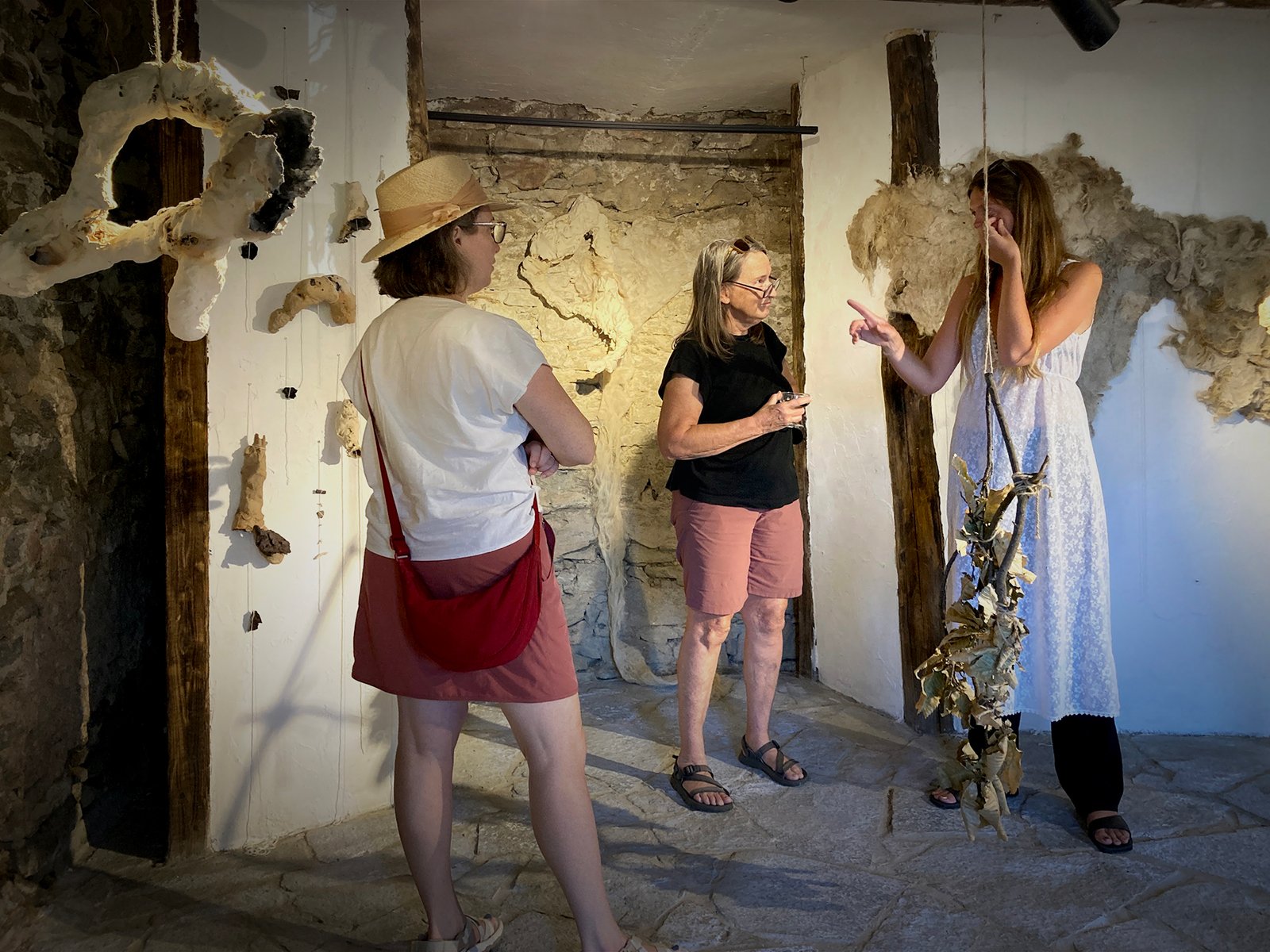
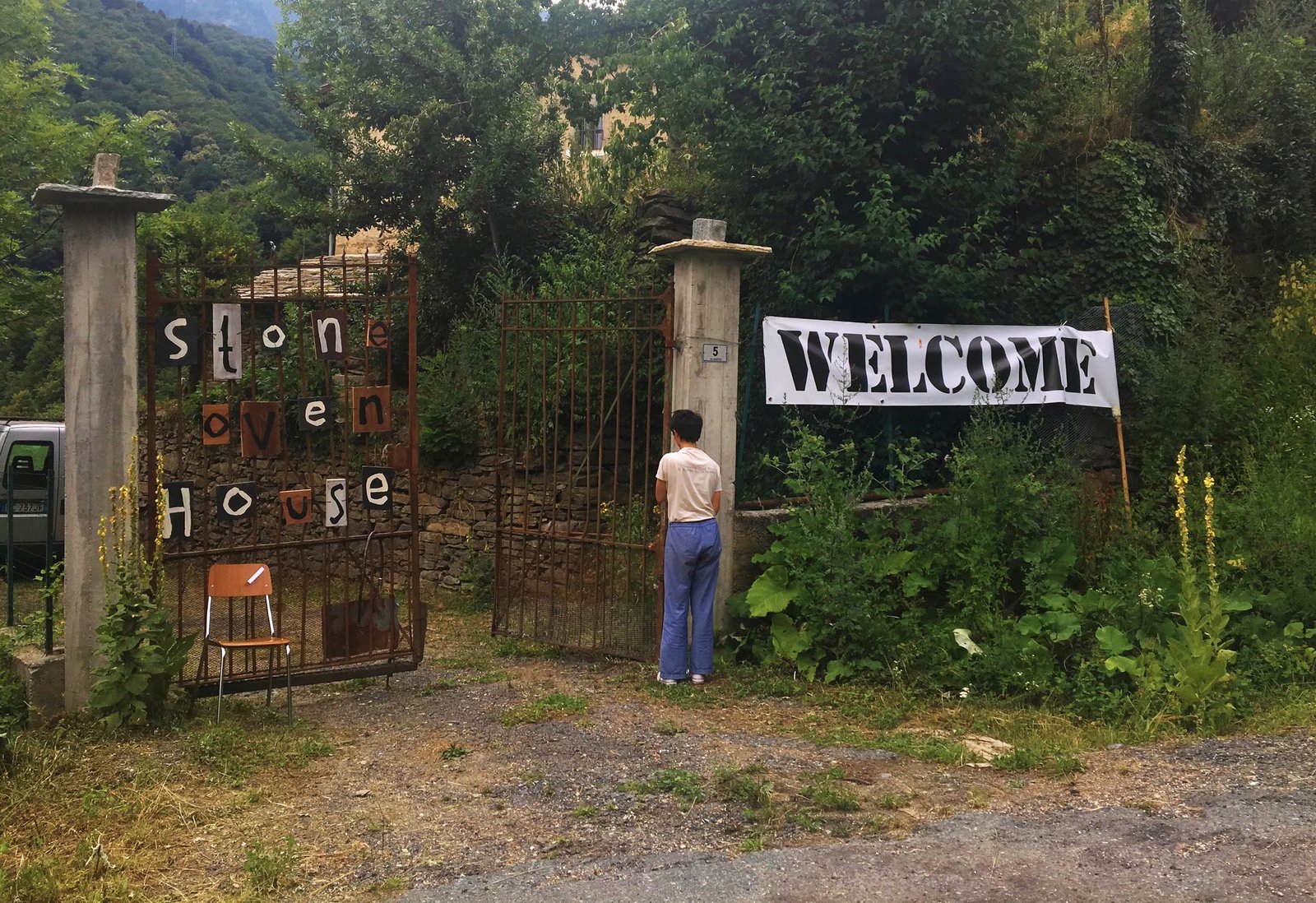
Restoration of the neighbouring historic estate of Vernarèa began in 2018. From 2020, it became the main home of Stone Oven House, bringing more rooms, an old hayloft, a stone oven, studios, exhibition and performance spaces, and extensive grounds. At the same time, the history of the place itself began to emerge.
During the Second World War, the Pavarin family had sheltered the Jewish sculptor Roberto Terracini here with his wife and daughter. Further connections led back into the history of Rorà, the early settlement on this hillside, the vanished church of San Nicolao and the Waldensian past of the valley. A contemporary project shaped by travel, exchange and trust had found itself in a house and landscape where freedom, refuge and mutual help had mattered long before. No one had planned that parallel; it was discovered here.
Social sculpture
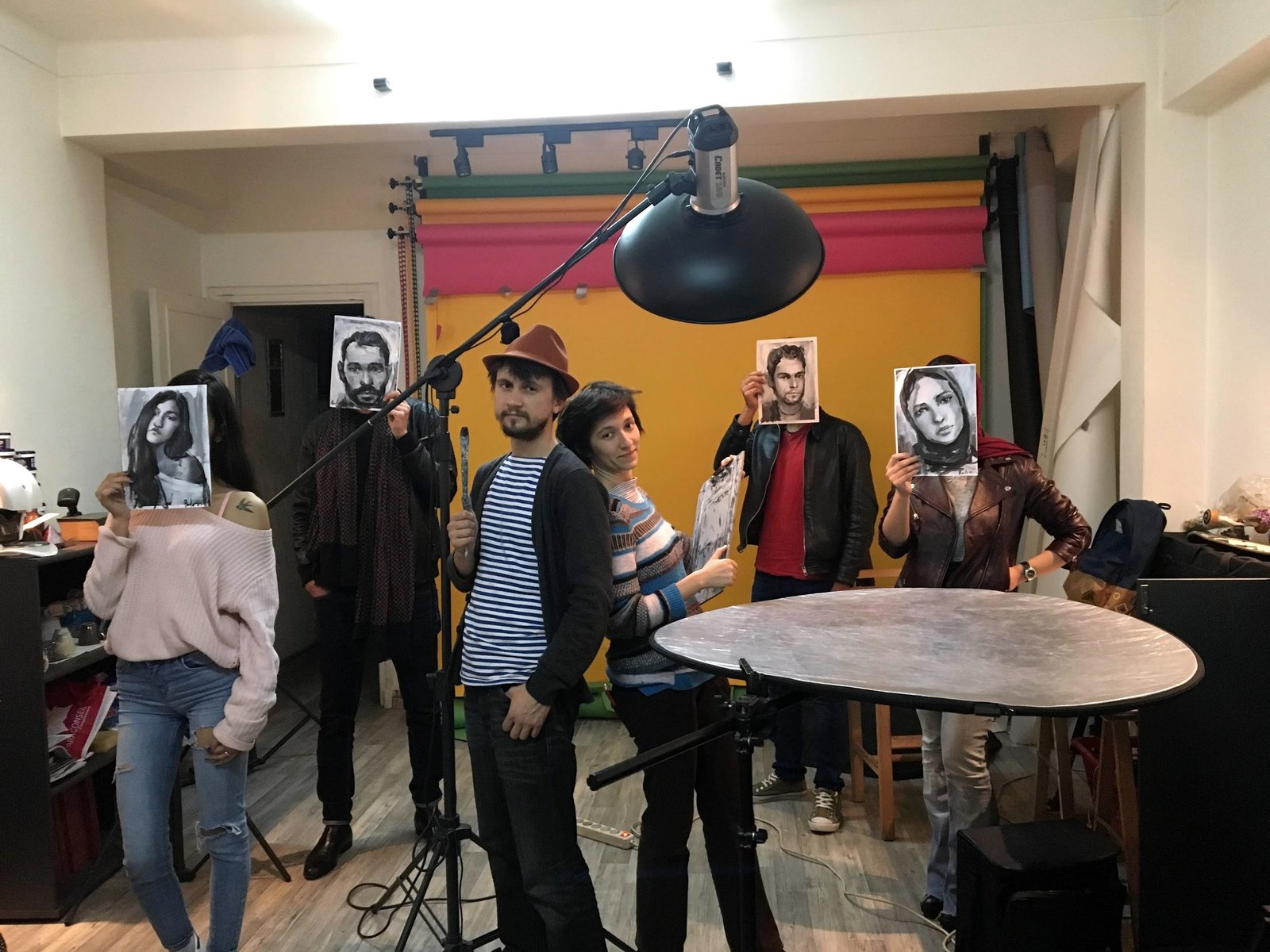
Stone Oven House has never fitted entirely within the definition of an artist residency. Artists, local residents, musicians, travellers and families meet here across ages, professions, languages and countries. People who might otherwise never have met can find themselves at the same table. Someone once called this kind of project a social sculpture. The description felt right: its materials are not only buildings, timber, stone and artworks, but the relationships between people.
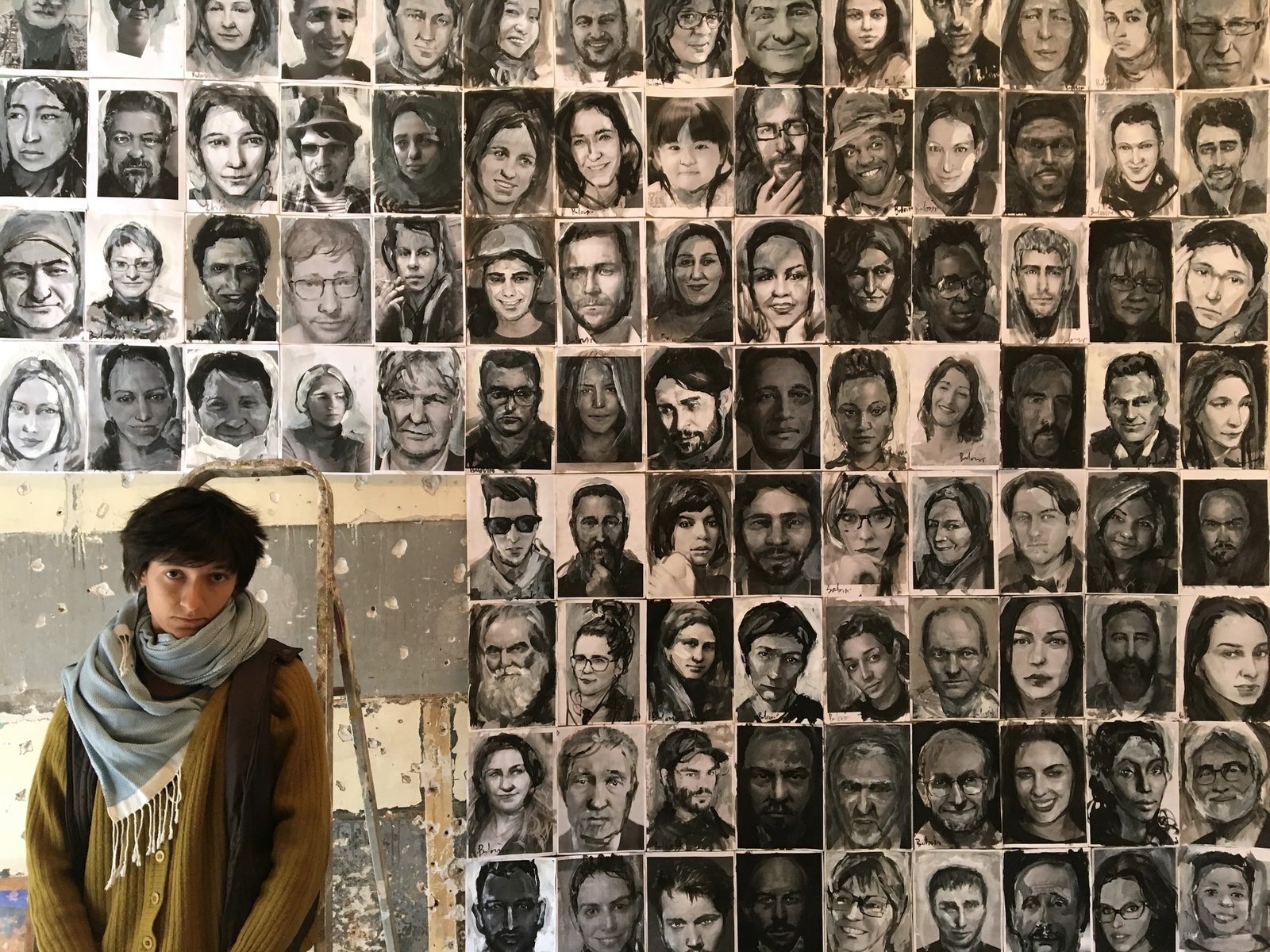
Thousands have taken part in In Kind Exchange over the years; published accounts put the number at around eight thousand. Their portraits and the stories around them have travelled to many countries. For Sergey and Claudia, the life the project made possible—its encounters, journeys and unforeseen openings—has always mattered more than its exhibition history. Stone Oven House grew out of one of those openings.
A house as refuge
In time, the project’s history intersected once more with the history of the building. Stone Oven House welcomed people who needed a temporary home for reasons other than travel, including people forced to leave Ukraine after the outbreak of war. It also became part of the international Artists at Risk network, hosting artists and cultural workers who needed a safe place to live and continue their work.
At Vernarèa, this role has a particular resonance: decades earlier, the same house had sheltered Roberto Terracini’s family. These are different periods and different circumstances, and it would be wrong to turn them into a single legend. Yet the recurring thread is difficult to miss: once again, the house offers somewhere to pause when a person is far from their own home.
Stone Oven House and Stone Oven Stay
Today, Stone Oven House is the name of both the place and the wider cultural project. It encompasses an artist residency, exhibitions, concerts, gatherings and the association’s programmes, alongside the family life of Balovin & Beccato. Its life extends well beyond the accommodation offered here.
Stone Oven Stay is the hospitality project within that setting, with its own responsibility for guest accommodation and the experience of staying here. It is the project you deal with when booking a room or the guesthouse on this website. You do not need to join an artist residency to come as a guest. You are entering a place that existed before it began offering guest accommodation, and that continues to have a much wider life around it.
Price and value
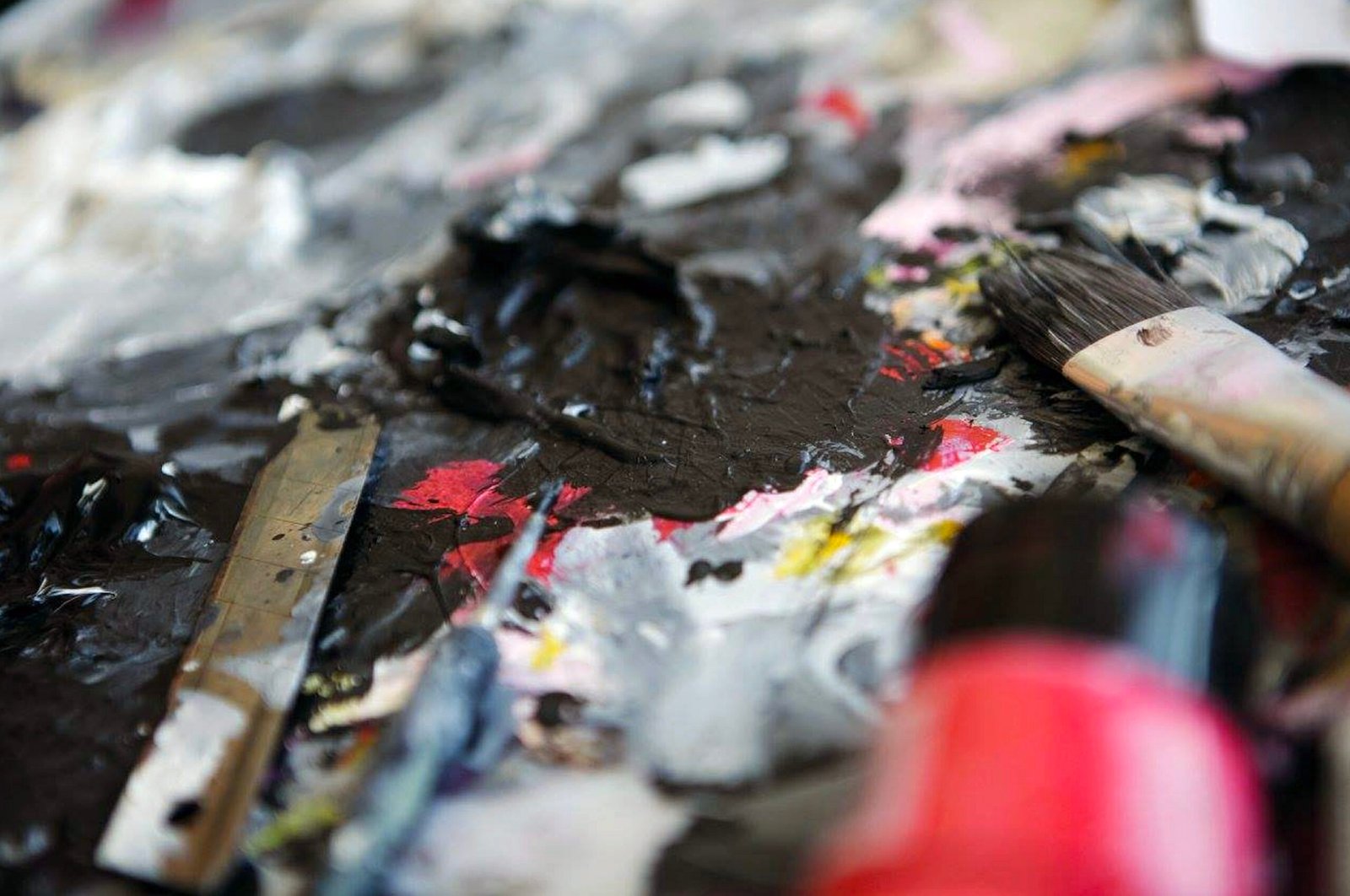
Stone Oven Stay does not cancel out the history of In Kind Exchange. Instead, it makes the distinction between price and value especially clear. A historic house needs continuing restoration, heating, maintenance and professional work. Cultural projects and residencies need resources too. Money is a necessary part of this system.
But much of what people value about Stone Oven House could not simply have been ordered and bought. Its interiors came together over years. Old objects found new uses; artworks remained after their makers left; things arrived from different countries. Its approach to welcoming people grew through years of travel and life in other people’s homes. The relationships around the place took longer to build than any renovation. You can buy an old building, expensive furniture and good art. It is harder to buy the history that connects them. Stone Oven House was assembled from treasures gathered piece by piece.
The experiment continues
In Kind Exchange once asked what might happen if money were temporarily removed from an artist’s relationship with the world. Over time, the question grew wider. Today, Stone Oven House explores what a place can become when its value is made from architecture and art, professional work and gifts, comfort and memory, money and human participation.
There is no ending written in advance for this experiment. The house continues to change with the people who come here.